
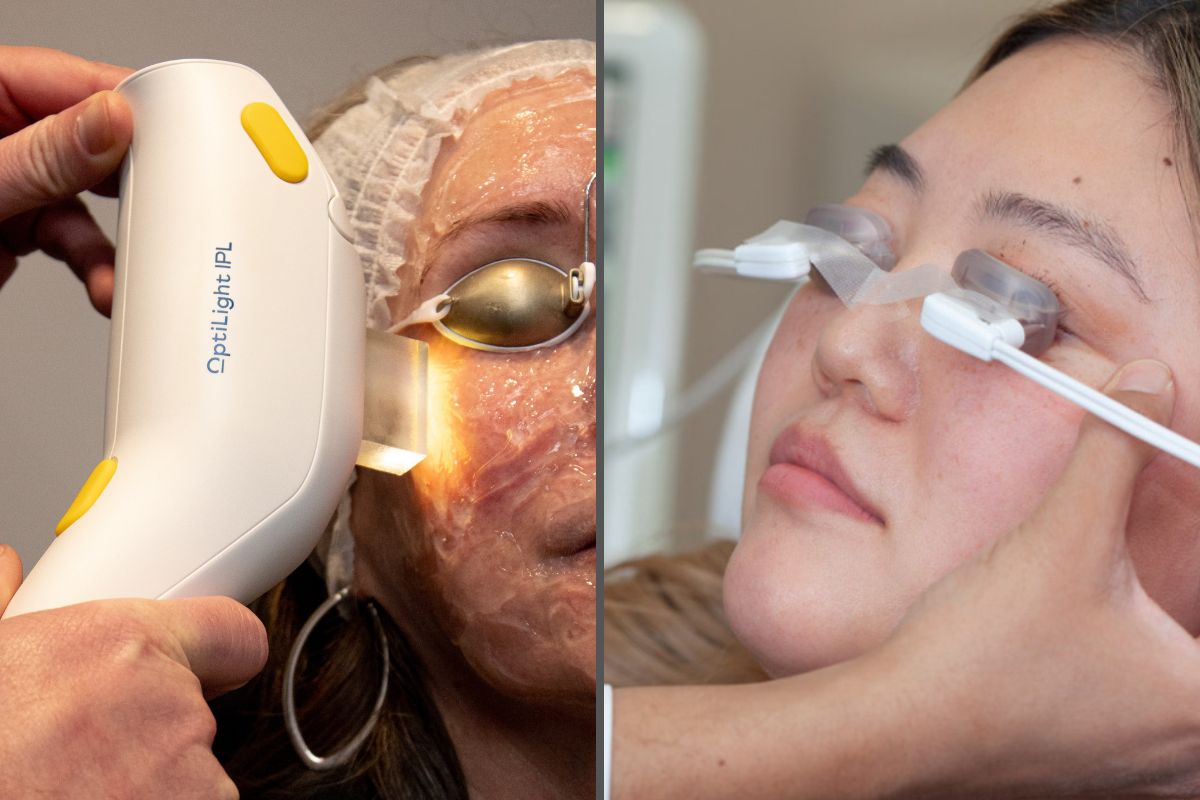
If eye drops and warm compresses are not providing enough relief, your eye doctor may recommend an in-office dry eye treatment. Two options you may hear about are intense pulsed light (IPL) therapy and LipiFlow®. Both can help manage dry eye linked to meibomian gland dysfunction (MGD), but they address different parts of the problem.
The best treatment depends on what is causing your symptoms, what your eyelids and tear film show during testing, and whether inflammation, gland blockage, or both are affecting your eyes.
When IPL may be recommended
IPL therapy may be recommended when inflammation is a major contributor to dry eye. It uses gentle pulses of light around the eyelids to help reduce inflammation that can interfere with tear-film quality and meibomian gland function.
IPL can be particularly helpful for patients with:
- Lid-margin inflammation
- Rosacea or visible eyelid blood vessels
- Ongoing redness and irritation
- Dry eye symptoms that persist despite home care
When LipiFlow may be recommended
LipiFlow is often considered when the main concern is blocked or poorly functioning meibomian glands. It uses controlled heat and gentle pressure to soften and clear thickened oils from the glands.
LipiFlow may be a good fit when an evaluation shows:
- Blocked glands or thickened oils
- Tears that evaporate too quickly
- Gland dysfunction contributing to unstable vision
- Contact lens discomfort or end-of-day dryness
Put simply, IPL can help address inflammation contributing to dry eye, while LipiFlow focuses on helping blocked glands release the oils needed for a healthier tear film.
What does your eye doctor look for?
Symptoms alone do not always identify the source of dry eye. Two people may both have redness, irritation, and blurry vision but need different treatment approaches.
During an evaluation, your eye doctor may consider:
- Meibomian gland health: Are the glands blocked or producing thick oils?
- Tear evaporation: Does the tear film break apart too quickly between blinks?
- Inflammation: Is inflammation affecting the eye surface or eyelid margins?
- Rosacea or visible eyelid blood vessels: These can be relevant when considering IPL.
- Previous treatment response: Have drops, eyelid cleansers, or heat masks provided enough relief?
- Daily triggers: Are screens, wind, contact lenses, or end-of-day symptoms the biggest concern?
We use dry eye-specific testing, including the OCULUS Keratograph® 5M, TearLab, and InflammaDry, to evaluate the tear film, gland health, and inflammation.
Can IPL and LipiFlow be used together?
Yes. Dry eye often has more than one contributing factor. A patient may have blocked glands and ongoing inflammation, so treating only one issue may not provide complete relief.
Depending on your results, your eye doctor may recommend IPL, LipiFlow, or a combination of treatments alongside home care or prescription medication. The right sequence depends on your specific findings and goals.
Get a treatment plan built for your eyes
IPL and LipiFlow are not competing “best” treatments. They are different tools for different dry eye patterns. If your eyes regularly feel dry, gritty, red, tired, or uncomfortable in contact lenses, a dedicated dry eye assessment can help identify the cause.
Schedule an appointment to find a dry eye treatment plan based on what your eyes need.