
If you’ve ever found yourself squinting under bright overhead lights, feeling drained after screen time, or dreading glare while driving, you’re not alone. We talk with many patients who feel like modern lighting (LEDs, screens, sunlight glare, big box store lighting) can be too much for their eyes.
For some people, light sensitivity is occasional. For others, it’s disruptive and exhausting, and it can be closely tied to migraine. The good news is that there are practical, day-to-day steps you can take to manage the impact of light, plus lens options we can help you compare.
Migraine vs. headache: what’s the difference?
Many people use “migraine” and “headache” interchangeably, but they aren’t the same.
Migraine is a neurological disease that can involve symptoms like light sensitivity, sound sensitivity, nausea, and more.
A headache can be a symptom, but not every headache is migraine.
If you’ve noticed that light sensitivity shows up during an attack, or even between attacks, that’s a common experience for people living with migraine.
Why light can feel so intense
Light sensitivity is often referred to as photophobia. Put simply: certain kinds of light can feel uncomfortable, overwhelming, or even painful.
For many people living with migraine, light can trigger or worsen attacks. This can include:
- harsh overhead lighting (especially some fluorescent lighting)
- bright screens and device glare
- sunlight and outdoor glare
- fast changes in brightness (moving from a dark room into bright light)
If this sounds familiar, it’s not “in your head.” It’s a real, common symptom, and it’s something we can help you plan around.
Practical ways to manage light sensitivity
Because everyone’s triggers are different, there isn’t one perfect solution. But these strategies often help patients feel more comfortable day to day.
1) Make your environment easier on your eyes
If you can, try:
- switching to warmer, softer lighting
- using dimmers to reduce intensity
- reducing glare where possible (screen glare, shiny surfaces, window glare)
- adjusting your workspace so you’re not facing a bright light source
2) Be intentional with screens
Screens can be a big trigger, especially with long workdays. Helpful habits include:
- lowering screen brightness (and avoiding max brightness when possible)
- taking quick breaks (even 30–60 seconds helps some people)
- adjusting screen angle/position to reduce reflections
- trying warmer display settings, if those feel more comfortable for you
3) Manage outdoor glare
For outdoor light and driving glare, consider:
- a hat or visor for overhead sun
- frames that provide a bit more coverage (to reduce side glare)
- lenses designed for comfort that still keep things clear
Why “darker” isn’t always better
A common instinct is to reach for the darkest sunglasses possible. But for many patients, darker lenses aren’t always the best answer, especially indoors or on screens.
What we’re usually aiming for is comfort and clarity, not just less light. Very dark tints, even sunglasses, can sometimes:
- make indoor vision harder
- distort colors
- create uncomfortable adjustments when you move between lighting environments
That’s why many patients do better with lens options that focus on light quality (which light is getting through), not just light quantity (how dark the lens is).
Avulux: designed to help manage the impact of light
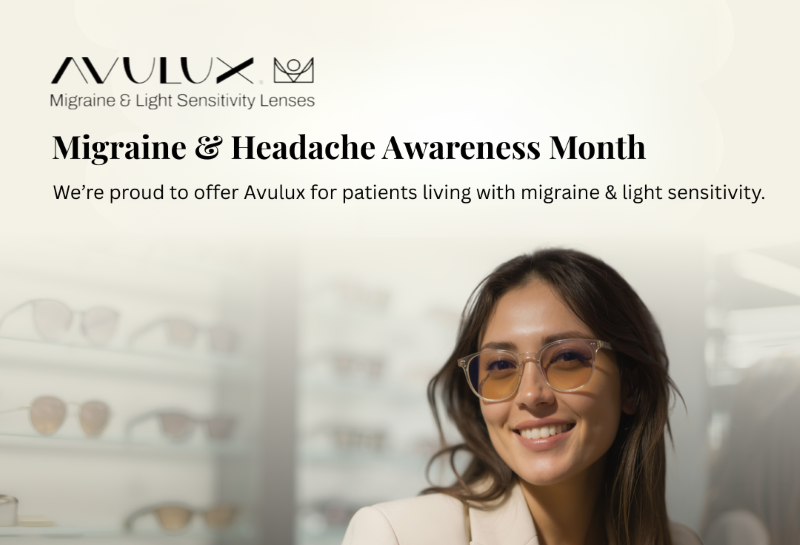
In our practice, one lens option we may recommend is Avulux, a multi-band precision filter designed to reduce the impact of harsh or triggering light while supporting comfortable, clear vision.
If light sensitivity is a big part of what you experience, Avulux may be worth discussing with us, especially if you want something you can use for everyday light (screens, overhead lighting, daytime glare), not just for being outdoors.
Avulux delivers 2x better light quality compared to typical filters or tints.
Who might consider Avulux?
Avulux may be a good option if you:
- are living with migraine and deal with light sensitivity
- struggle with screens, overhead LEDs, or glare
- feel limited by light exposure during attacks or between attacks
- want an option that supports comfort without feeling like you have to “live in the dark”
Ready to explore options? Book an appointment.
If light sensitivity is affecting your day-to-day, we’re here to help. Book an appointment, and we’ll talk through your symptoms, your triggers, and your routine, and help you compare lens options for managing light sensitivity, including Avulux.
Avulux FAQ
Q: Do I need a prescription to get Avulux lenses?
A: No, however, we always recommend booking an appointment with our team so we can show you the glasses in-office and recommend the right setup for your eyes and your day-to-day.
Q: Can I wear Avulux indoors (screens/LED lighting)?
A: Yes. Many people choose Avulux specifically for everyday indoor light, like screens and overhead lighting, plus daytime glare.
Q: Are Avulux lenses just a tint?
A: No. Avulux is designed as a precision filter to help manage the impact of triggering light while not distorting your color perception.
Q: When should I wear them?
A: Many people wear them proactively during known trigger activities (screens, harsh indoor lighting, glare) and at the earliest signs of a migraine attack or when experiencing light sensitivity.
Q: How do I know if Avulux is right for me?
A: Everyone’s triggers and needs are different. Book an appointment, and we’ll help you compare options and find the right fit.